There’s something special about the “feeling of a map.” For Seth Frame, GISP, this is both figurative and literal. With degrees in Art, Anthropology, and GIS and Cartography, Seth has spent his career moving between two seemingly unrelated worlds: the data-driven technical world of GIS and the expressive creative world of art.
.jpg) Seth’s geospatial career began the summer after his high school graduation while working at the county auditor’s office in South Bend, Indiana. What started as a summer job filing deeds turned into a permanent one when he was offered the opportunity to learn GIS to create maps and help with property location services. Seth jumped at the opportunity, eager to learn.
Seth’s geospatial career began the summer after his high school graduation while working at the county auditor’s office in South Bend, Indiana. What started as a summer job filing deeds turned into a permanent one when he was offered the opportunity to learn GIS to create maps and help with property location services. Seth jumped at the opportunity, eager to learn.
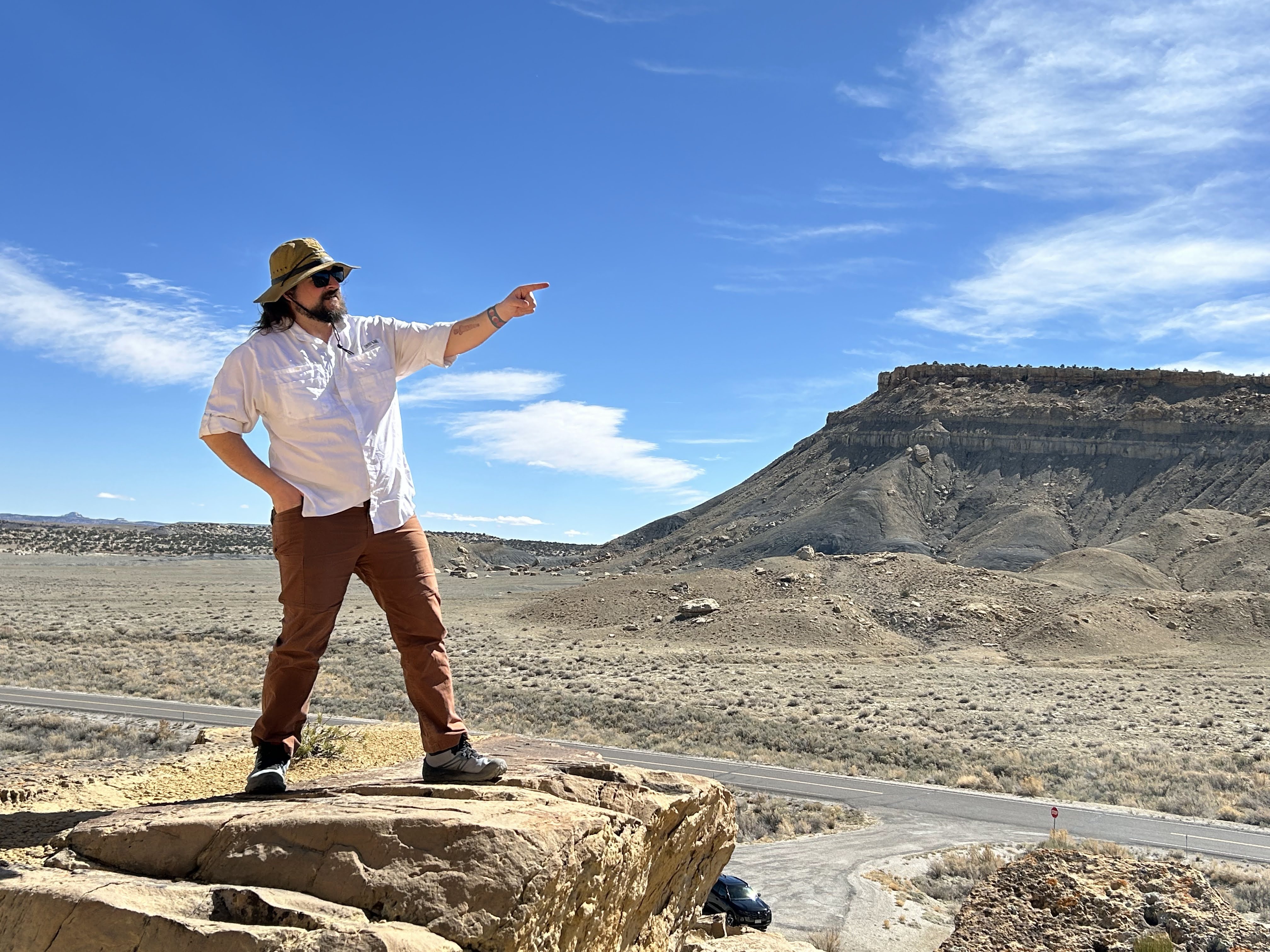 A year into that first GIS job, he took a road trip to Yellowstone and found himself drawn to the mountains. Or, in Seth’s words, “You know what? Mountains are kind of cool.” This road trip also led to a job where he mapped cultural resources in Sheridan, Wyoming. From there, archaeology, anthropology, and the curiosity into ancient things took hold. He spent four years in Wyoming, then six more in Colorado working on site sensitivity models for the BLM and picking up his anthropology degree along the way. A move back east to New York eventually led him to Tyler Technologies, where he’s spent the past decade solving a very different kind of mapping problem — routing school buses across county road networks in all 50 states except Hawaii.
Seth earned his GISP in 2019, not long after finishing his master’s degree, and he’s become something of an evangelist for it ever since. Through the New York State GIS Association’s continuing education committee, he hands out study guides “like candy” to anyone considering the exam. For Seth, having the GISP credential is a point of personal pride. Much of his career happened without formal credentials behind it, built instead on curiosity and on-the-job problem solving. His advice for anyone thinking about getting their GISP certification is to just do it.
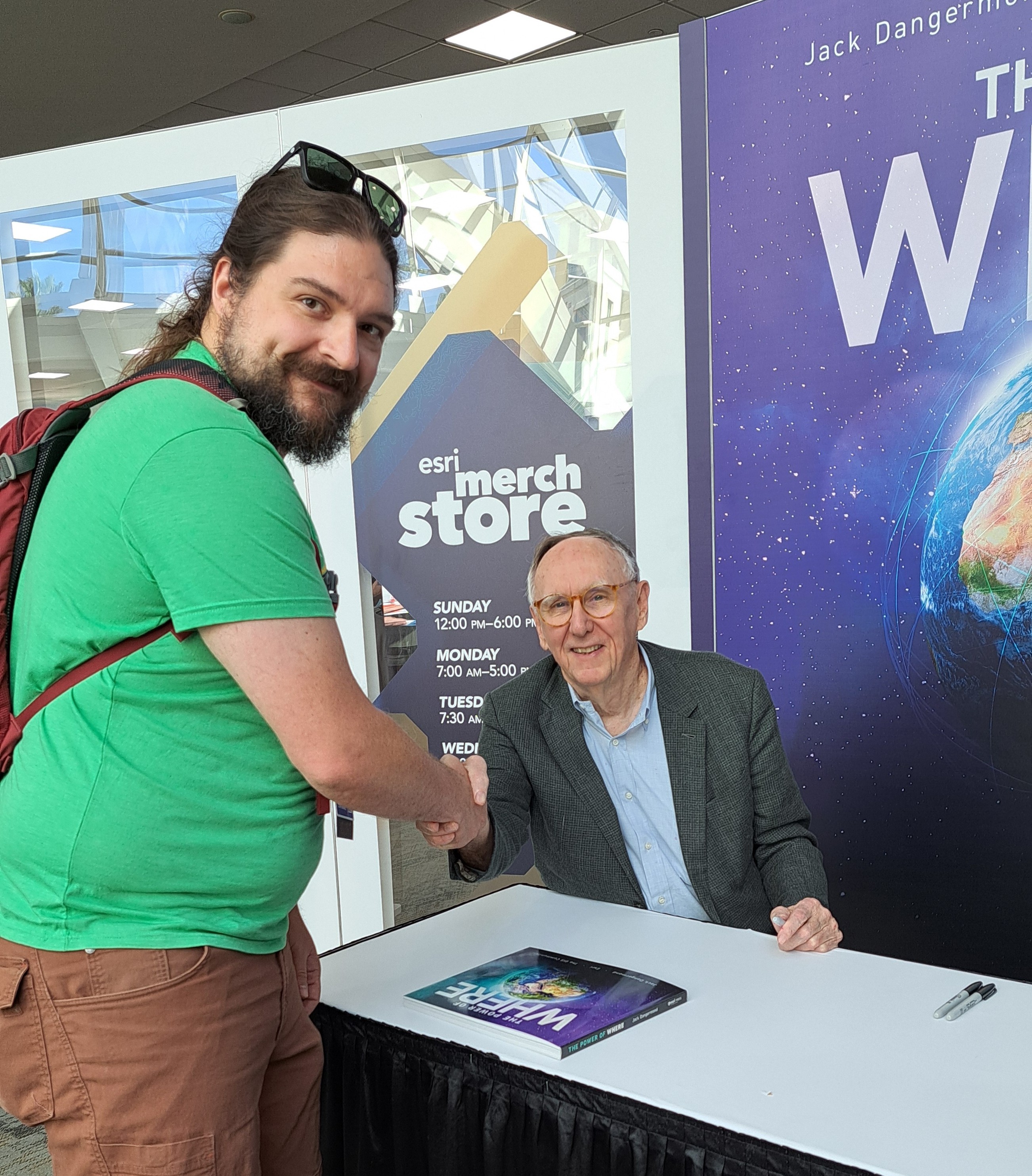 For those struggling a bit with imposter syndrome, feeling as if you’re not enough, getting the GISP can give an emotional boost. “There’s no downside to it,” he says. “I think it says a lot about you as a person and your career would only benefit from it.” For him, certification shows an aptitude and integrity beyond the letters, strengthening the profession as a whole. “The more people that get [the GISP], it gives the rest of us more credence and builds a solid foundation for certification,” he says. “So, it helps us all.”
Seth’s innate ability to find the story and beauty inside the technical world of GIS is what he hopes to bring more of into his GIS work, whether it’s redistricting maps for a local school district or making maps for fun. “I want to make pretty maps that have a message,” he says. When tasked with a map project, he asks himself, “How can I make it look good and be useful for the people that need it?”
If you ask Seth what a map can be, the conversation moves somewhere else entirely — into clay. As a trained and talented ceramic artist, he believes there’s “something artistic to be said about a map of the world made of dirt.” His piece translating the Spilhaus world ocean projection into carved clay has drawn many admirers to his talent for treating cartography as sculpture. “A ceramic map is kind of the opposite of what you want in a map,” he admits. “They’re not dynamic at all. They’re literally written in stone.” But that’s the point. It’s not meant to guide you through the wilderness. It’s meant to capture the feeling of a place.
For Seth, whether the medium is GIS or a handful of clay, the goal is the same: to create a piece that makes you feel something.
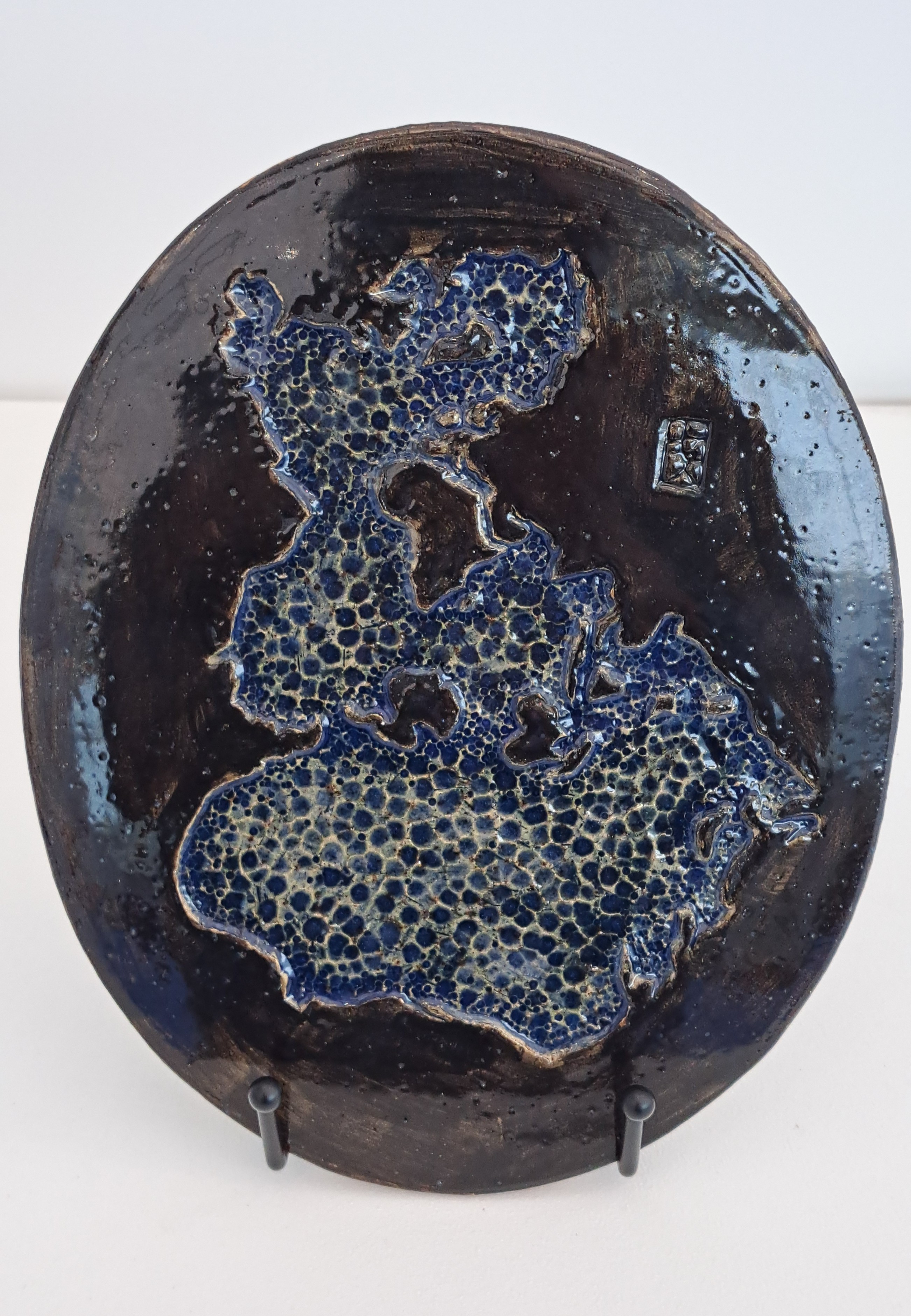
Ceramic Spilhaus Represenation By Seth Frame